Last updated 2026-07-09
TL;DR
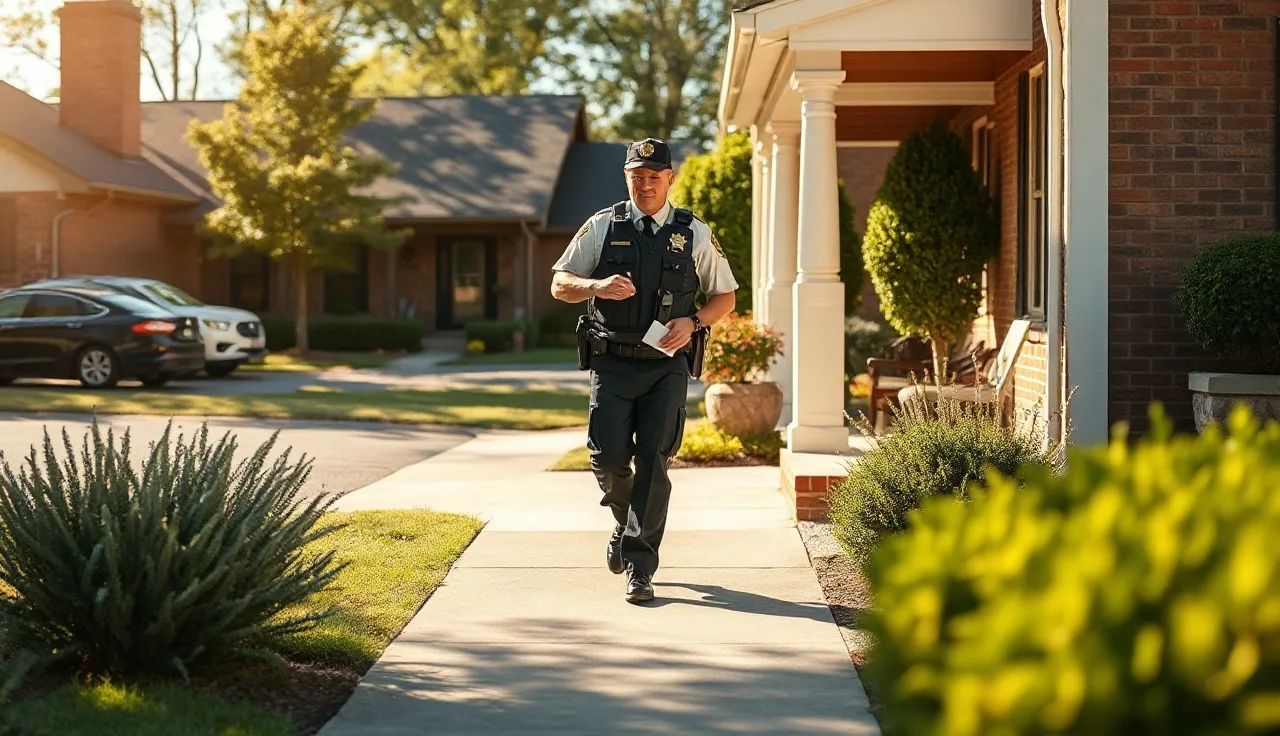
Serving divorce papers is the formal legal act of delivering a copy of your filed divorce petition to your spouse so they have official notice of the case. Courts require it before any hearing can happen. Depending on your state, service happens by sheriff, process server, certified mail, or publication, and must be proven with a filed proof-of-service document.
What does 'service of process' actually mean in a divorce?
Service of process is the official delivery of legal documents to the other party in a lawsuit. In a divorce, that means getting copies of the filed petition and the court summons into your spouse's hands in a way the court can verify. Handing something over politely isn't enough. The delivery has to follow specific rules set by your state's civil procedure code, and until it happens correctly, the judge can't move the case forward.
The U.S. Supreme Court set the constitutional floor for this in Mullane v. Central Hanover Bank & Trust Co., 339 U.S. 306 (1950), which held that due process requires notice "reasonably calculated, under all circumstances, to apprise interested parties of the pendency of the action" [11]. That principle runs straight through how every state designs its divorce service rules.
Once you file your petition with the court clerk, the case exists on paper. But nothing happens legally until your spouse is served. Think of service as the starting gun. The response clock (usually 20 to 30 days for your spouse to file an answer) doesn't start until the day service is done. Miss this step or do it wrong, and you could end up with a dismissed case or a judgment that gets overturned later.
For people handling their own uncontested divorce, service is the step that surprises them most. Filing feels like the hard part. But service has its own rules, its own paperwork, and its own deadlines. Getting it right matters.
What papers actually get served on a spouse?
The package your spouse receives is usually two documents, sometimes three. First is the Petition for Dissolution of Marriage (or Petition for Divorce, depending on your state's terminology). This is the document you filed to start the case. It lays out your grounds for divorce and your requests for property division, custody, support, and anything else you want the court to decide.
Second is the Summons. The court clerk issues this after you file. It's the official court notice telling your spouse a case has been filed against them, how many days they have to respond, and what happens if they don't. The summons language is usually standardized by the state. California's summons, for example, is form FL-110, and it includes automatic temporary restraining orders that kick in the moment your spouse is served, covering things like not moving children out of state or canceling insurance [1].
Some states add a blank response form, a financial disclosure form, or a case information sheet to the service package. Check your local court's self-help center page to see exactly what your county requires. Courts like the New York State court system publish specific checklists for what must be included [3].
If you prepared your own divorce papers using a service or document packet, those pre-filled forms are what you file and then serve. The served copies are typically conformed copies, meaning the clerk has stamped them with a file date and case number.
What are the different ways to serve divorce papers?
States allow several methods, and which ones are open to you depends on where your spouse is, whether they cooperate, and what your state's rules permit. Here are the main options.
DivorceClear is a $149 one-time self-help document preparation and organization service for uncontested, simple-custody divorces. You answer questions in plain language and get a personalized preparation packet: your worksheets and numbers organized, a settlement completeness outline, and a county-specific filing roadmap, so you can get organized without paying an attorney $2,000 to $5,000. It is not a law firm and does not give legal advice; court forms, deadlines, and fees are set by your state and county, and for advice about your situation you should consult a licensed family law attorney. See what the packet includes.
Personal service by another adult. Many states let any adult who isn't a party to the case (so, not you) hand-deliver the documents. A friend, family member, or coworker can do it. They have to be 18 or older and can't be the petitioner. This is often the cheapest route when your spouse is easy to find and cooperative.
Certified mail with return receipt. Some states permit service by certified mail. Your spouse has to sign for the package, and you file that signed return receipt card with the court as proof. A few states restrict mail service to the court clerk doing the mailing, not the petitioner. Read your state's rules closely here, because doing it yourself when the clerk is supposed to do it invalidates service.
Acceptance or acknowledgment of service. If your divorce is truly uncontested and your spouse is on board, they can sign a formal document, usually called an Acceptance of Service or Waiver of Service, acknowledging they received the papers, and you skip the server entirely. This is the best way to serve divorce papers in an uncontested case. It's free, it's fast, and it sidesteps any awkwardness of a process server showing up. The signed acceptance gets filed with the court in place of a proof of service.
Service by publication. When you genuinely can't locate your spouse after a documented, good-faith search, most states let you publish a notice in a court-approved local newspaper. This is the method of last resort. It's slow (typically runs four to six consecutive weeks) and costs anywhere from $50 to $300 or more depending on the newspaper's legal notice rates. The court usually has to grant permission before you use it [5].
Substituted service. If a process server makes multiple attempts and can't reach your spouse in person, many states allow leaving the documents with a competent adult at your spouse's home or workplace, then mailing a copy to the same address. California Code of Civil Procedure Section 415.20, for example, allows substituted service after reasonable diligence in attempting personal delivery [6].
How does service work when the divorce is uncontested and your spouse agrees?
This is where people over-complicate things. If your spouse knows the divorce is coming and is cooperative, you don't need to surprise them with a process server. The cleanest path is a signed Acceptance of Service or Waiver of Service form.
You hand your spouse a copy of the filed petition and summons. They review it, sign the acceptance form in front of a notary or according to your state's witnessing requirements, and you file that signed form with the court. Done. The court's clock starts from the date on the acceptance form.
This approach is standard in uncontested divorces. Many state courts hand out the acceptance form for free on their self-help websites. Texas calls it a Waiver of Service. Florida uses a form called the Answer, Waiver, and Request for Copy of Final Judgment. The names differ but the function is the same.
One thing to know: your spouse's signature on an acceptance of service is not the same as agreeing to the terms of the divorce. It only means they acknowledge receiving the papers. Make sure your spouse understands that difference before they sign.
DivorceClear is a $149 one-time self-help document preparation and organization service for uncontested, simple-custody divorces. You answer questions in plain language and get a personalized preparation packet: your worksheets and numbers organized, a settlement completeness outline, and a county-specific filing roadmap, so you can get organized without paying an attorney $2,000 to $5,000. It is not a law firm and does not give legal advice; court forms, deadlines, and fees are set by your state and county, and for advice about your situation you should consult a licensed family law attorney. See what the packet includes.
What happens after divorce papers are served?
Two things happen in parallel once service is complete. First, your spouse has a set number of days to file a written response. The deadline varies by state but is typically 30 days in California [6], 20 days plus the next Monday in Texas [7], 20 days in Florida [8], and 20 days in New York after in-state personal service [3]. The summons states the exact deadline.
Second, you (or your process server) must file proof of service with the court. This is a separate document that tells the court how, when, and where service happened. A professional process server fills out and files their own proof. If your spouse signed an acceptance, you file that. If you used certified mail, you file the signed return receipt. Without this filed proof, the court has no record that service happened, and your case can stall indefinitely.
If your spouse doesn't respond within the deadline and you've filed proof of service, you can ask the court for a default judgment. The court reviews your petition and, if everything checks out, can grant the divorce without your spouse's participation. That's different from a contested situation where both parties actively negotiate or litigate terms.
In a fully uncontested case where you've both already agreed on everything, your spouse may file a formal response agreeing to all terms, or they may simply sign the acceptance of service and a marital settlement agreement, and you both appear at a brief final hearing together. Plenty of uncontested divorces never involve a fight at all.
How much does it cost to serve divorce papers?
The cost depends on which method you use. Here's a realistic breakdown.
| Method | Typical cost | Who does it |
|---|---|---|
| Acceptance/waiver of service | $0 | Spouse signs voluntarily |
| Sheriff's service (in-county) | $20 to $100 | Sheriff's civil division |
| Private process server | $50 to $200 | Licensed professional |
| Certified mail (clerk-handled) | $10 to $20 in postage | Court clerk or you |
| Substituted service (process server) | $75 to $250 | Licensed professional |
| Service by publication | $50 to $300+ | Approved newspaper |
If your spouse cooperates and signs a waiver, service costs nothing. That's the reality for most uncontested divorces, and it's worth asking your spouse upfront before you pay anyone.
Private process server fees vary by location. Urban areas with high demand run higher. Rush service (same-day or next-day) often doubles the standard rate. Some servers charge extra for multiple attempts or for travel outside their normal service area.
Publisher rates for service by publication catch people off guard. Most newspapers charge by the line or by the column inch, and the notice runs several times. Get a written quote from the specific paper the court approves before you commit to this route [5].
DivorceClear is a $149 one-time self-help document preparation and organization service for uncontested, simple-custody divorces. You answer questions in plain language and get a personalized preparation packet: your worksheets and numbers organized, a settlement completeness outline, and a county-specific filing roadmap, so you can get organized without paying an attorney $2,000 to $5,000. It is not a law firm and does not give legal advice; court forms, deadlines, and fees are set by your state and county, and for advice about your situation you should consult a licensed family law attorney. See what the packet includes.
What is a proof of service form and how do you file it?
Proof of service is the document that closes the loop for the court. It's a sworn statement explaining exactly how the documents were delivered. Most states have standardized forms for it. California uses form FL-115 for service of summons [1]. Texas has its own Return of Service form. Many states let you download these from their court website for free.
If a professional process server did the job, they usually complete and notarize their own affidavit of service and can file it directly with the court or hand it to you to file. Ask your process server upfront whether they file it or you do.
If your spouse signed an acceptance of service, you file that signed form itself as the proof. The acceptance form works as both the acknowledgment and the proof in most states.
The proof of service typically has to include the name of the person served, the date and time of service, the address or location where service happened, and the method used. If someone other than a professional server did the job (a friend, say), they sign the proof of service under penalty of perjury.
File proof of service as soon as you can after it happens. Don't sit on it. Courts need it in the file before they'll schedule hearings or accept other filings that depend on completed service.
Can you serve divorce papers yourself?
No. In every U.S. state, the petitioner (the person who filed) can't serve their own divorce papers. You're a party to the case, and the rules everywhere require the person doing service to be a non-party.
This trips people up surprisingly often. You can hand your spouse the documents informally to review, but that doesn't count as valid legal service. For service to count, someone else has to do it: a sheriff, a process server, a friend who's at least 18, or the court clerk in mail-service states.
If your spouse will sign an acceptance of service, you can hand them the documents to read first. But the signed acceptance form has to be their voluntary act, not something you coerced or witnessed improperly. Some states require the acceptance signature to be notarized.
The rule exists to protect the integrity of the process. Courts need a neutral third party who can attest, if it's ever challenged, that the documents actually reached the right person on the right date.
What if your spouse avoids being served or cannot be found?
This is where service gets genuinely complicated. If your spouse is dodging service, your process server has tools. Most states allow substituted service after multiple failed personal attempts, meaning leaving documents with another adult at the home or workplace and then mailing a copy. The server has to document each attempt carefully, because those records become part of the court file if service is ever challenged.
If you truly don't know where your spouse is, you'll need to make a documented, good-faith effort to find them before a court will allow alternative methods. That usually means checking the last known address, contacting relatives if reasonable, searching public records, and sometimes hiring a skip trace service. Courts want to see that you actually tried.
Service by publication is the last resort when everything else fails. You file a motion asking the court's permission to publish notice in a local newspaper. The court approves a specific paper and sets a publication schedule. After the required weeks run, you file a publisher's affidavit with the court as proof. The divorce can then proceed even without your spouse's participation, though you're generally limited to what you asked for in the petition, and any relief affecting your spouse (like spousal support you'd pay them) may require extra steps [5].
If your spouse is in another country, the Hague Service Convention may apply if that country is a signatory. Service in those cases often goes through official government channels and can take months. The U.S. State Department publishes guidance on international service of process [9].
How long does the service process take?
With a cooperative spouse who signs an acceptance of service, service can be done the same day you file. Literally. You file in the morning, hand your spouse the stamped copies, they sign the acceptance form, and you file the form that afternoon. The case moves forward right away.
With a professional process server and a willing or easy-to-find spouse, expect one to five business days from when you hire them to completed service.
Substituted service takes longer, because the server has to make multiple personal attempts first, and some states require a waiting period (often 10 days) after leaving documents before service counts as complete. California's substituted service has a 10-day waiting period before the proof of service can be filed [6].
Service by publication is the slowest option. Court permission, the publication run (four to six weeks typically), and then filing the publisher's affidavit can stretch the service phase to two months or more.
If your case is uncontested and you can use an acceptance of service, nothing about service needs to be slow. The rest of the divorce timeline (the mandatory waiting period, financial disclosures, and final hearing) is what eats the clock, not service itself.
What are the rules for serving divorce papers in specific states?
Service rules are state-specific and sometimes county-specific. Here's a quick orientation to major states.
California: Governed by California Code of Civil Procedure Sections 415.10 through 415.95. Personal service is preferred. Substituted service requires reasonable diligence. The respondent has 30 days to respond after personal service [6].
Texas: Texas Rules of Civil Procedure Rule 106 governs service. A court may authorize alternative service if personal service fails after documented attempts. The responding spouse has until the Monday after 20 days have passed to file an answer [7].
Florida: Florida Family Law Rules of Procedure and Florida Statute Section 48.031 govern service. Personal service by a process server or sheriff is standard. The spouse has 20 days to respond [8].
New York: CPLR Article 3 governs service. New York requires personal service for a divorce summons in most cases. The spouse has 20 days to respond if served in New York, 30 days if served out of state [3].
Illinois: Illinois Supreme Court Rule 102 and 735 ILCS 5/2-202 govern service. A sheriff or licensed private detective agency has to perform service. Response time is typically 30 days.
Every state court system publishes self-help resources. The National Center for State Courts hosts information on court self-representation at ncsc.org [10]. Your own county court's self-help page is the most reliable place to get local form names and filing requirements.
What's the best way to serve divorce papers in an uncontested divorce?
If your divorce is uncontested and your spouse is willing, the acceptance of service (waiver of service) is almost always the best path. It's free, it's fast, and it avoids drama.
Have a clear conversation with your spouse first. Explain that signing the acceptance doesn't lock them into any particular settlement terms, it just acknowledges they received the paperwork. If they're nervous, encourage them to review the documents with a divorce attorney before signing, or at least to use their state court's self-help resources to understand what they're agreeing to.
Once they sign, copy the signed acceptance before you file it. Keep a copy for yourself. File the original with the clerk and get a stamped copy back for your records.
If your spouse is cooperative but has privacy concerns (say, they don't want a process server showing up at their job), the acceptance of service solves that completely. That's a real reason people choose it beyond saving money.
If your spouse is unresponsive but not hostile, a private process server is faster and more reliable than a sheriff in most metro areas. Sheriffs prioritize criminal matters, so civil service can take weeks. A reputable private server with good reviews often finishes within 48 hours.
The most useful resource for any state-specific question is your local court's self-help center. These are badly under-used. Many offer free in-person help from legal volunteers who can review your service documents before you file them. The divorce papers you've prepared need to match your court's exact current forms, so checking there saves headaches.
This article is general information, not legal advice. If your situation is complicated, especially if your spouse is avoiding service, is in another country, or you're dealing with safety concerns, talk to a divorce lawyer about your options.
Frequently asked questions
Can my friend serve divorce papers on my spouse?
Yes, in most states, any adult who isn't a party to the case can serve divorce papers. Your friend has to be at least 18. After serving the documents, they complete and sign a proof of service form, which you then file with the court. Check your specific state's rules, because a few states restrict who can serve to licensed professionals or court officials.
Does my spouse have to sign something when they're served?
Not if service is by personal delivery or substituted service. A process server or sheriff can leave the documents with your spouse whether or not your spouse signs anything. The server then files a sworn affidavit as proof. The exception is acceptance or waiver of service, where your spouse voluntarily signs a form acknowledging receipt. That signature is what makes that particular method work.
What happens if my spouse refuses to answer the door for a process server?
The server documents the attempt and tries again. After multiple documented failed attempts, most states allow substituted service, leaving documents with another adult at the residence or workplace and then mailing a copy. If a server makes a reasonable number of attempts and can't complete service, they'll advise you on whether substituted service or another method fits your state.
How do I prove divorce papers were served?
You file a proof of service document with the court. It's a sworn statement naming who was served, how, where, and when. Professional process servers complete their own affidavit of service. If your spouse signed an acceptance of service, that signed form itself is your proof. If the court clerk mailed the documents, the clerk files the certificate. Without filed proof of service, your case can't move forward.
Can my spouse say they were never served if they actually were?
They can claim it, but a properly documented proof of service from a professional server or sheriff is strong evidence the other way. Courts take false claims about service seriously. If you have a signed acceptance of service, it's nearly impossible to dispute. This is one reason professional servers document their attempts carefully and courts require sworn affidavits rather than informal confirmation.
What if I don't know my spouse's address to serve them?
You'll need to make a documented good-faith search first. Check last known addresses, public records, contact family if appropriate, and consider a skip trace service. Courts want evidence you genuinely tried before they'll approve alternative methods like service by publication. Document everything in writing. If you still can't find them, file a motion for alternative service and present your search evidence to the judge.
How long does my spouse have to respond after being served?
It varies by state. California gives 30 days from personal service. Texas gives until the Monday after 20 days have passed. Florida allows 20 days. New York allows 20 days for in-state service and 30 days if served out of state. The summons your spouse receives states the exact deadline. If they miss it and you've filed proof of service, you can request a default.
Does service of divorce papers mean the divorce is final?
No. Service just starts the clock on your spouse's right to respond. The divorce isn't final until a judge signs a final judgment of dissolution. Before that, you typically complete financial disclosures, reach or have the court decide all issues (property, custody, support), satisfy any mandatory waiting period your state requires, and attend a final hearing or submit documents for a judge's review.
Can a spouse waive service of divorce papers?
Yes. In an uncontested divorce, this is common. Your spouse signs a Waiver of Service or Acceptance of Service form, which you then file with the court as proof. This skips the process server or sheriff entirely. The form is available from your state court's self-help website. Some states require the signature to be notarized, so check your specific state's instructions.
What if my spouse lives in another state or country?
You can still serve them; the rules just shift. For out-of-state service, most states allow service under the laws of the state where service happens, or by certified mail with return receipt. For international service, the Hague Service Convention applies if the country is a signatory, which often means routing service through official government channels. This can take months. The U.S. State Department publishes guidance on international service of process.
Is there a time limit on how long I have to serve divorce papers after filing?
Yes. Most states set a deadline for completing service after you file, commonly 120 days (federal courts use this standard and many states mirror it). California allows 60 days initially but grants extensions. Texas has no hard statutory cutoff, but courts can dismiss cases that show no service activity. Check your state's rules and don't let the case sit after filing.
What is service by publication and when can I use it?
Service by publication means printing a legal notice in a court-approved newspaper for a set number of weeks, typically four to six. You can only use it after making documented, good-faith efforts to find your spouse through other means and getting the court's permission. After the run finishes, you file the newspaper's publisher's affidavit as proof of service. It's the slowest and most expensive option.
Sources
- California Courts - Form FL-110 (Summons) and FL-115 (Proof of Service of Summons): California summons form FL-110 includes automatic temporary restraining orders that take effect upon service; proof of service filed on FL-115
- California Courts Self-Help Center: State court self-help centers publish checklists for required service documents in family law cases
- New York State Courts - Divorce Information: New York requires personal service for divorce summons; respondent has 20 days to respond if served in-state, 30 days if served out of state
- National Center for State Courts: Court filing fees for divorce typically range from $100 to $435 depending on state and county; sheriff service costs vary by county from $20 to $100
- California Courts Self-Help Center - Service by Publication: Service by publication requires court permission beforehand and typically runs for four to six consecutive weeks in a court-approved newspaper
- California Code of Civil Procedure - Section 415.20: California CCP 415.20 authorizes substituted service after reasonable diligence in attempting personal delivery; 10-day waiting period applies before proof of service can be filed; respondent has 30 days to respond after personal service
- Texas Rules of Civil Procedure - Rule 106: Texas Rule of Civil Procedure 106 governs service; responding spouse has until the Monday after 20 days have passed after service to file an answer
- Florida Statutes - Section 48.031, Service of Process: Florida Statute 48.031 governs service of process; spouse has 20 days to respond after service in a Florida divorce proceeding
- U.S. Department of State - Service of Process Abroad: The U.S. State Department provides guidance on international service of process including use of the Hague Service Convention for signatory countries
- National Center for State Courts: NCSC publishes information and resources on state court self-representation across the U.S.
- U.S. Supreme Court - Mullane v. Central Hanover Bank & Trust Co., 339 U.S. 306 (1950): The Supreme Court held that due process requires notice 'reasonably calculated, under all circumstances, to apprise interested parties of the pendency of the action,' forming the constitutional basis for service of process requirements